Tuesday, June 28, 2016

The Other Winston Churchill

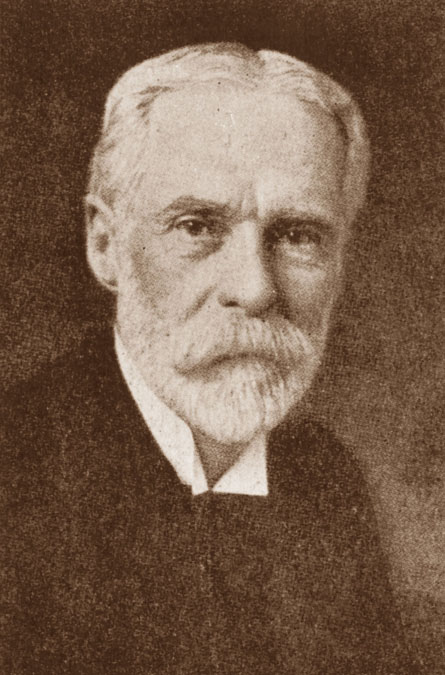
Winston Churchill, 1908

Long before British Prime Minister Winston Churchill became famous around the world, another man by the same name enjoyed widespread fame throughout the United States.  The American Winston Churchill (1871-1947) was one of the best-selling U.S. authors in the first part of the 20th century.  In this article, we will look briefly at his career and his interaction with the Glessners.

WINSTON CHURCHILL

Winston Church was born in 1871 in St. Louis, Missouri, making him just one month younger than the Glessners’ son George.  After attending the United States Naval Academy and serving briefly as the managing editor of Cosmopolitan Magazine, he “retired” to devote all his time to writing historical novels.

His first novel to appear in book form, The Celebrity, was published in 1898.  It followed Mr. Keegan’s Elopement which had been serialized in a magazine in 1896.  However, it was his novel Richard Carvel, published in 1899, that brought him widespread fame and success, selling nearly two million copies. 


In 1901, Churchill published The Crisis, set in his native Missouri in the years leading up to the Civil War.  It was the best-selling book in the United States that year.  It was also in 1901 that the Glessners met Churchill.

THE GLESSNERS MEET THE AUTHOR

The Glessners were visiting Boston in March 1901 when, as noted in Frances Glessner’s journal:

“Wednesday I lunched at Mrs. Clifford Moore’s.  In the afternoon we met at Mrs. Brooks’ and went over the Longfellow house.  We made calls and in the evening dined at Dr. Councilman’s where we met Mr. & Mrs. Endicott and Mr. & Mrs. Winston Churchill – the author of Richard Carvel.”

THE COUNCILMANS


Dr. William Thomas Councilman (1854-1933) was a well-known pathologist, and had served as the Shattuck Professor of Pathological Anatomy at Harvard Medical School since 1892.  He was especially known for his work with yellow fever, and a specific globule of cells in the liver of yellow fever victims is known to this day as “Councilman body.”  He also made important contributions to the study of smallpox, diphtheria, and dysentery.


His wife was the former Isabella “Isa” Coolidge, the younger sister of architect Charles A. Coolidge, who helped to complete the Glessners’ home on Prairie Avenue after the death of H. H. Richardson in 1886.  (Coolidge and his partners George Shepley and Charles Rutan took charge of Richardson’s practice, renaming the firm Shepley, Rutan and Coolidge.  They would later design a new campus for Harvard Medical School).  Charles and Isa Coolidge were both close friends with the Glessners, as was their younger brother Frederic, who married the prominent music patron Elizabeth Sprague, daughter of the Glessners’ close friends and Prairie Avenue neighbors, Albert and Nancy Sprague.

THE CRISIS

Frances Glessner notes in her journal that she read Churchill’s The Crisis during 1901, while at her summer estate, The Rocks.  (Other books read that summer included Up From Slavery by Booker T. Washington and The Life of the Bee by Maurice Maeterlinck).  Shortly after finishing the novel, she wrote to Churchill telling him how much she enjoyed it.  In June 1901, Churchill replied to her letter, and Frances Glessner pasted the letter inside the front cover of The Crisis.  


His letter reads:

“My dear Mrs. Glessner,
Your letter was sent to me in Canada, to my Salmon Club, and then lost.  This leaves me for the present without your address, so I am sending this to Mrs. Councilman in the hope that it will ultimately reach you.  I appreciated greatly the trouble which you took to write to me, and it gives me great pleasure to know that you liked the book.  I am glad of the chance of telling you how much Mrs. Churchill and I enjoyed meeting you that evening at dinner, and we hope that we may have that pleasure again, in the near future.
Sincerely yours,
Winston Churchill”

HARLAKENDEN HOUSE


The letter is written on stationery from Churchill’s home, Harlakenden House.  That house was designed by architect Charles Platt and completed in 1899 in Cornish, New Hampshire.  It was named for Churchill’s wife, the former Mabel Harlakenden.   The home served as the summer White House for President Woodrow Wilson from 1913 through 1915.  It was destroyed by fire in 1923.

LATER YEARS

Churchill published The Crossing in 1904 telling the story of the westward expansion of the United States, including the settlement of Kentucky.  It was the best-selling novel in the United States that year, and the Glessners owned a copy. 

He became deeply involved in the Cornish Art Colony and served two terms in the New Hampshire state legislature in 1903 and 1905.  (George Glessner would serve in the state legislature a decade later).  During World War I, Churchill toured the battlefield of Europe, writing his first non-fiction work.

Shortly after the end of the war, Churchill stopped writing and withdrew from public life, focusing on painting in watercolors.  He became well respected for his landscapes, several of which are now in museum collections in New Hampshire.

Not surprisingly, the identity of the two Winston Churchills, both of whom were authors, became confused.  Interestingly, both also had political careers and were noted amateur painters.  After the British Winston Churchill became aware of the American Churchill’s books, he wrote to him suggesting that he would sign his own works “Winston Spencer Churchill” to differentiate them.  The American Churchill replied that the suggestion was a good one, and he would have done the same, if he had a middle name. 

Winston Churchill died in Winter Park, Florida in 1947 at the age of 75. 


Monday, June 20, 2016

A Letter to George and Fanny - 1881


The art of writing a letter is quickly fading into obscurity, but in the late 19th century, it was the predominant form of communication.  The museum collection contains thousands of letters written to the Glessners, including many written to each other during times of separation.  In this article, we will examine one of the most fascinating – a letter written by John Glessner to his children George and Fanny in 1881.

What sets this letter apart from others in the collection is John Glessner’s clever use of illustrations to depict words or phrases.  In some cases the substitution is literal – a picture of a bottle of medicine in place of the actual word.  But often, the illustration is more creative – a picture of a lion representing the words “lie in.”  Other illustrations depict what Glessner is writing about – a picture of a boy feeding a duck – as he imagines what his children are doing in his absence.

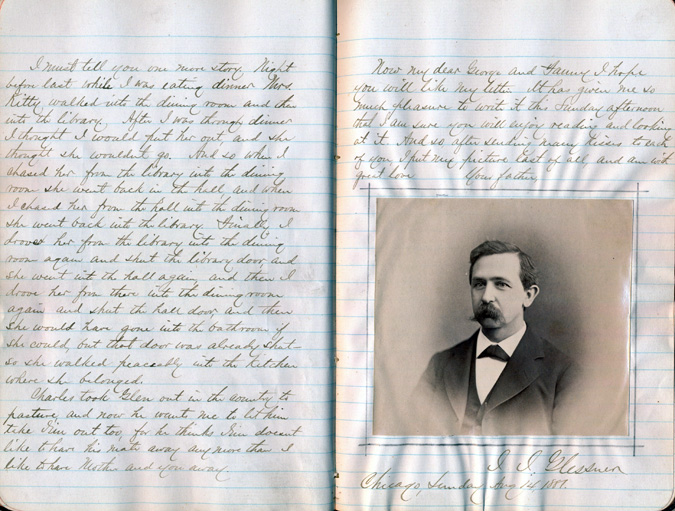
The letter sent to Glessner’s children in August 1881 is 36 pages long and is set within a leather bound journal stamped “A LETTER TO GEORGE AND FANNY.” on the cover.  It clearly took up a full Sunday afternoon to create the contents including selecting and pasting all of the illustrations from newspapers and periodicals.  A few illustrations are hand drawn, and two photographs of family members are included as well. 

John Glessner penned the letter to George (age 9) and Fanny (age 3) shortly after they left to spend the summer at the Twin Mountain House in New Hampshire with their mother and two female servants, Katy and Lizzie.  (Their own summer home, The Rocks, was not built until 1883).


The letter begins “My dear children” and continues:

“I have intended writing you a letter but so many people have called to see me about so many things in the evenings and on Sundays that I couldn’t write before, and now I send my letter in a book.

“When I come home there is no little boy and no little girl to meet me, and I miss you very much; but I think of you both very often – first of George and then of Fanny, and then of Fanny and then of George, and cannot tell which one I love the best, and so conclude I love you both the best.

“After you have read this far you must do what this boy is trying to do – “

(referring to a hand drawn illustration of a boy doing a hand stand).


He then goes on to recount their departure and the reason for their trip:

“First I’ll show you how you looked to me when I last saw you.  And then how I looked as I walked away from the station.  The reason why I look so much the largest is because I was so near and you were so far away.

“Why did I send you from home when I couldn’t go too?

“THE WISE ENJOY GOOD HEALTH – That is why!

“And that you might not be compelled to take MEDICINE.”

Health and medicine are references to George’s severe allergies and the relief he experienced when spending time in the White Mountains of New Hampshire.


A few pages later, Glessner pondered what his children might be doing:

“I thought of you both fishing and I wondered what else you would do.

“Perhaps – George might sail a boat, perhaps Fanny might scrape up acquaintance with somebody’s nice little dog.”


A bit later on, Glessner writes:

“And when I go to bed I sometimes dream of you.  And one night I dreamed that I saw you leaving Boston for the Twin Mountain House; and if you will turn over the page you will see . . .

“How you looked.  First was Mother at the head of the procession, and George holding on to her, and Fanny holding on to George, and Katy holding on to Fanny, and Lizzie holding on to Katy, and a whole string of bundles and baskets and band-boxes and satchels and trunks holding on to Lizzie.

“Bear in mind this was only a dream, but perhaps you really did look a good deal like that picture.”


A reminder to be well-behaved follows:

“You see I think of you in every way, but love most to think of George as a good big boy who is kind to and takes good care of his little sister, and of Fanny as a sweet, well-behaved little girl, and of both as loving Mother and doing as she says, and of all of you eager to see me, and then I imagine you look just like this.

“I can’t make a picture of Mother alone; if I could she should be at a table, writing to me.

“She must lie in (lion) the bed and rest all she can, and you must not disturb her, for she must get strong and well, too.”


He spends a good deal of time describing what he is observing at their Chicago home:

“Georgie’s farm or at least some of its products.

“And some of our flowers, but these are not as pretty as ours.  There were eight of these large lilies on one stalk at one time.  The pansies are beautiful.  And nearly every evening five or six humming-bird moths come to the phlox bed.”


Glessner was well aware of his son’s interest in fire engines, so included the following:

“Last night I heard a fire alarm and began counting as I knew George would do, and pretty soon I heard a steam fire engine go by on Randolph street, and thought if George were here wouldn’t he run to look at this!

He also includes illustrations of the servants left at home:

“You like to think of your friends at home I know.

“Here’s Alice when she sets the table (not often).

“And here’s Mary when she clears it off.

“You must look very closely or you’ll not be able to distinguish one from the other.”

(The two illustrations are identical).


Glessner remembered to include illustrations of the pets and animals at home as well:

“Here are some of your friends whom you will be glad to see when you come home – Tom, Ned, Jim, Glen.”


The letter draws to a close with a long story about their cat, Mrs. Kitty, and later a bit about their horses Glen and Jim.  In closing, Glessner writes:

“Now my dear George and Fanny I hope you will like my letter.  It has given me so much pleasure to write it this Sunday afternoon that I am sure you will enjoy reading and looking at it.  And so after sending many kisses to each of you, I put my picture last of all, and am with great love, Your Father, J. J. Glessner.  Chicago, Sunday Aug. 14, 1881.”


The letter is a charming relic of an era when the written word was cherished as the main mode of communication.  Although written 135 years ago, it still clearly conveys the love a father had for his children, and the delight it must have given them upon receipt.

Tuesday, June 7, 2016

Flashback 1981 - Glessner House and Prairie Avenue


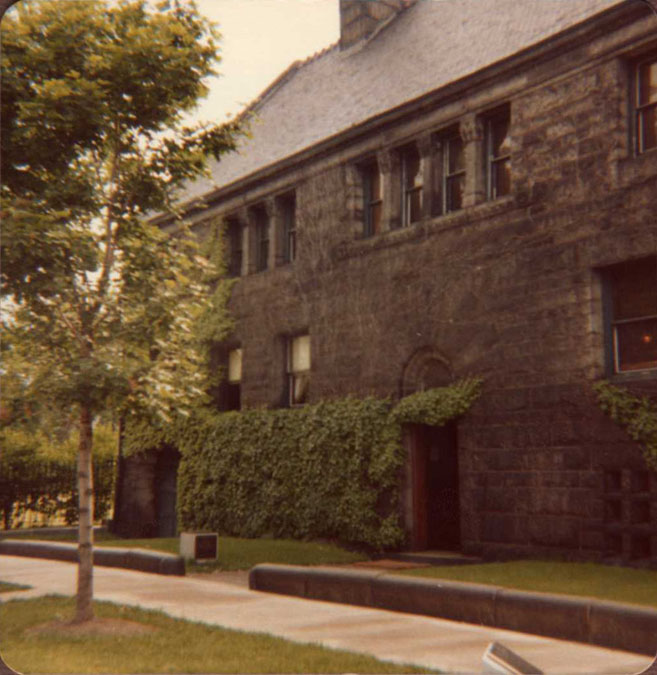
It all began with a ride aboard Chicago’s “Culture Bus” 35 years ago today – Sunday June 7, 1981.  Among those riding the south route of the bus that afternoon was a 16-year-old student at Carl Schurz High School (a Chicago landmark designed by Dwight Perkins in 1910).  That student was William Tyre, now completing his ninth year as Executive Director and Curator of Glessner House Museum.  It was his first visit to Glessner House and Prairie Avenue and, to say the least, it had a lasting impression.

Chicago’s Culture Bus

Culture Bus (Ahmed Burson, Flickr)

The Culture Bus was a brilliant idea conceived by the CTA and launched in 1977.  For the price of a supertransfer - $1.20 for adults and 60 cents for children in those days - riders could board and exit the bus as many times as they wished, stopping at numerous architectural landmarks and cultural institutions around the city.  A trained CTA guide would provide commentary on the various sites.  The buses, which began and ended their route in front of the Art Institute, operated on Sundays and holidays from Memorial Day through mid-October.  During that first year two routes explored sites on the north and south sides of the city. 


The north route included nearly a dozen sites extending as far north as Lincoln Park Zoo and the Conservatory.  The south route made stops at the Spertus Museum, Prairie Avenue Historic District, Stephen Douglas Monument, Museum of Science and Industry, University of Chicago, Oriental Institute, DuSable Museum, Smart Gallery, Field Museum, Shedd Aquarium, and the Planetarium.  In 1978, a west route was added which included the Polish and Ukrainian Museums, the Garfield Park Conservatory, the University of Illinois campus, and Hull House.  The Culture Bus continued to operate through the 1991 season, but was a victim of budget cuts the following year.

Glessner House in 1981

Glessner House, June 7, 1981 (photo by William Tyre)

Glessner House courtyard, June 7, 1981 (photo by William Tyre)

Glessner House Museum appeared very different than it does today.  The house had not yet been cleaned and restored on the outside, so when arriving at the site, visitors saw a hulking black mass – the Braggville granite and clay roof tiles covered in decades of black soot left behind from the years when coal was burned to provide heat.  Ivy covered portions of the walls on both the front and courtyard sides of the building. 


Visitors started their tour in the coach house, which at the time served as the Visitors Center.  Filled with a variety of books and other items, the room itself still bore scars from the decades of use by the Lithographic Technical Foundation, which used the room for housing large equipment including printing presses.

Master bedroom, June 7, 1981 (photo by William Tyre)

Several spaces had been restored on the interior, although none of them contained the number of objects as are found in the rooms today.  The first was the library, completed in 1974, followed soon after by the schoolroom, master bedroom, and kitchen wing with its associated pantries.  Other original objects, returned to the museum by the Glessners’ granddaughter Martha Lee Batchelder, were displayed in various rooms including the courtyard bedroom, which housed a number of pieces designed by Isaac Scott. 

Steinway piano, June 7, 1981 (photo by William Tyre)

The piano had been returned to the house in 1979, a gift of Gardner Cowles Jr., founder and publisher of Look magazine.  It sat in the largely empty parlor, the elegant Pretyman designed hand-painted burlap wallcovering long since painted over.


The courtyard had been renovated with a large patio of granite pavers to accommodate museum functions and to house a collection of architectural fragments from various demolished buildings around the city by Sullivan, Wright, and others.

Prairie Avenue in 1981


The streetscape on the 1800 block of Prairie Avenue had been restored in 1978, returning that block to its 1890s appearance.  Sidewalks composed of huge limestone slabs, granite curbs, cobblestone gutters, and period lighting transported visitors back in time.  A cul-de-sac at the south end of the block closed off the street to auto traffic. 


A series of interpretive panels, depicting a number of the houses that had originally stood on the 1800 and 1900 blocks, were set into alcoves marking the location of the front entrances to the huge mansions.  The image above shows the plaque for the Joseph Sears house, which stood at 1815 South Prairie Avenue until it was razed in 1968 to make way for the office building shown below.


The west side of Prairie Avenue extending south from Glessner to the Keith House, was a large grassy parcel, with the original cobblestone alley still cutting through from north to south.  West of the alley, along Indiana Avenue, the Clarke House was in the midst of an $800,000+ restoration.  It would open to the public in October 1982. 


The northwest corner of Prairie Avenue and Cullerton, south of the Keith House, was occupied by the factory for Gaylord Products.  That building would be razed in 1999 to make way for the Commonwealth on Prairie Avenue townhouse development – the first new residential construction on Prairie Avenue in 95 years.  In 1981, such an idea would have seemed but a dream.


The east side of the 1800 block of Prairie Avenue included the Kimball and Coleman mansions, at the time occupied by R. R. Donnelley.  A huge warehouse, erected by R. R. Donnelley, marked the site of the former Marshall Field mansion, and stood just north the of the Marshall Field Jr. house. 


Junior’s house had housed a nursing home until 1977 when it was shut down.  By 1981, the house sat vacant, its large windows boarded up and its future uncertain, in spite of being protected as part of the Prairie Avenue Historic District, designated a Chicago landmark in 1979.  South of Junior’s house, a large parking lot was utilized by the Pipefitters Union.


The northeast corner of Prairie Avenue and 18th Street, originally the site of the George Pullman mansion, was occupied by an enormous brick garage that extended nearly a block to the north and housed school buses. 


A bronze plaque on the building, installed by the Chicago Historical Society, noted that it was the site of the Battle of Fort Dearborn on August 15, 1812.  Additional buses were parked in a large open lot on Calumet Avenue east of the Kimball and Coleman houses. 


Opposite the lot on Calumet were two remnants of the earlier history of the neighborhood.  A huge wooden bridge had been constructed for visitors to the 1933 Century of Progress World’s Fair which was sited on the land immediately to the east (now Northerly Island).  Many of the vacant lots on Prairie Avenue had been converted into parking lots for the visitors to the fair, and the bridge provided access to the fairgrounds over the Illinois Central railroad tracks.  


Just south of the bridge, a small section of George Pullman’s brownstone garden wall was still in place.  The bridge and Pullman wall disappeared in 2004.


The west side of Indiana Avenue was straddled on both sides of 18th Street by a large parking lot and offices for Yellow Cab Company.  Those parcels were redeveloped into the Kensington Park townhomes starting in 2002.

First Steps in Area Revival


Just one week after Tyre’s visit, the Chicago Tribune published an article about the neighborhood.  Entitled “First steps in area revival,” the article was written by Michael L. Millenson and focused heavily on the restoration work being undertaken at Glessner House, at that time still owned by the Chicago Architecture Foundation.  Richard Combs, executive director of the Foundation, was quoted as saying that “the restoration work is nearly finished.”  It was an optimistic quote – restoration work continues to this day!

The article also noted that the Marshall Field Jr. house had recently been sold for “a little under $100,000” to three investors who planned a restaurant in the 23,000 square foot building.  That plan never materialized, and the house, already in “dire need of renovation” in 1981, would sit empty for another 22 years, until it was successfully converted into condominiums.

The article closed with a prediction that the neighborhood may someday be redeveloped and may even become a residential community once again:

“Foundation officials hope the revival of the South Loop area through the Dearborn Park and Transportation Building projects will extend to Prairie Avenue.  Right now, the area stands lonely in the middle of crumbling and old commercial buildings; urban renewal planned a decade ago never came.

“’I think a residential neighborhood is a long way away, but it’s possible,’ ventures Jane Lucas, who runs the foundation’s museum store.  ‘It’s really quite safe – nobody lives around here.’”

Even in her optimism, Lucas and others in 1981 probably could have never foreseen the thriving residential community that defines the South Loop today, anchored by the Prairie Avenue Historic District.  Redevelopment would not start until 1992, when the old Eastman Kodak building at 1727 S. Indiana Avenue became the first to convert to residential use, offering rental units targeting artists.  It was the beginning of the rebirth of one of Chicago’s most historic and unique neighborhoods.


Monday, May 30, 2016

Remembering Bryan Lathrop


This month marks the 100th anniversary of the death of Bryan Lathrop.  Amassing a fortune in real estate and the insurance business, he became an extraordinary philanthropist in Chicago, supporting numerous organizations.  It was through his long-time service to the Chicago Symphony Orchestra that he and his wife Helen became close friends with the Glessners.

Bryan Lathrop was born in Alexandria, Virginia in 1844.  His family moved to Chicago at the outbreak of the Civil War, Chicago being the home of his uncle Thomas Barbour Bryan.  Lathrop was sent to Europe to study and did not return to Chicago until 1865.  It was during his years in Europe that he developed a deep appreciation for art, culture and landscape design, which would guide his future endeavors.  He later noted:

“In Europe (the intelligent traveler) sees almost everywhere evidences of a sense of beauty . . . In America, almost everywhere he is struck by the want of it. . . In this new country of ours the struggle for existence has been intense, and the practical side of life has been developed while the aesthetic side has lain dormant.”

Upon his return to Chicago, Lathrop joined his uncle’s real estate investment practice.  The two men shared a great deal in common, including their appreciation for landscape gardening.  As such, it is not surprising that Bryan involved his nephew in the development of Graceland Cemetery, with Lathrop joining the board of managers in 1867.  When his uncle moved to Washington in 1877, Lathrop became the president of the board, guiding the development of the cemetery until his death nearly forty years later.  


Almost immediately, Lathrop engaged the services of a civil engineer by the name of Ossian C. Simonds, who would go on to become one of Chicago’s most important landscape architects.  Together they shared an understanding and appreciation for naturalistic landscapes, and their work at Graceland had a profound effect on not only the cemetery, but the development of landscape architecture in the United States. 

Lathrop became an early advocate for the development of parks in Chicago, and as vice president of the Lincoln Park board, led an effort to extend that park along the shore of Lake Michigan supporting the concept of naturalism in its design. 


In 1891, Lathrop and his wife Helen Aldis, whom he had married in 1875, commissioned Charles Follen McKim, of the firm McKim, Mead and White, to design their home at 120 East Bellevue Place.  Completed in time for the World’s Columbian Exposition in 1893, the house was described by architect Alfred Hoyt Granger as “the most perfect piece of Georgian architecture in Chicago.”  McKim came to Chicago in early 1891 regarding his design for the Agricultural Building at the Fair, and it was at that time that he and Lathrop were brought together.  One of the few buildings in Chicago designed by the firm, the design brought Georgian Revival to the Gold Coast, and in less than a decade, it was the predominant style.  (The house has been owned and occupied by The Fortnightly since 1922, and was designated a Chicago landmark in 1973).

Vauxhall Bridge, 1861; James Abbott McNeill Whistler
(Collection of the Art Institute of Chicago)

Lathrop was a sophisticated and well-respected art collector, and the home was filled with his treasures.  Of particular significance was his collection of the works of James Abbott McNeill Whistler, the largest in the country. 

Bryan Lathrop became a trustee of the Orchestral Association in 1894 and four years later was named vice president.  In 1903, he was elected president and served in that capacity until his death.  It was under his leadership that the orchestra moved into its new home, Orchestra Hall, and that the current name, the Chicago Symphony Orchestra, was adopted in early 1913. 

First program using the Chicago Symphony Orchestra name, February 1913

Lathrop was a co-founder of the Chicago Real Estate Board, and developed an excellent reputation for handling large estates both in Chicago and in the East.  His other philanthropic activities included the Chicago Relief and Aid Society and the Newberry Library.

Lathrop died from heart disease at his Bellevue Place home in 1916.  As noted in Illinois, the Heart of the Nation by Edward Fitzsimmons Dunne:

“Bryan Lathrop, who died May 13, 1916, was a wealthy, generous, and public spirited citizen to whom the people of the city were indebted during his life time and since for his constructive work in behalf of several of Chicago’s cultural and philanthropic institutions.”

The funeral service was held in the chapel of Graceland Cemetery.  Frederick Stock, conductor of the Chicago Symphony Orchestra, cancelled their concert in Buffalo, New York and returned to Chicago in time for the funeral.  Edgar Lee Masters wrote a commemorative poem about Lathrop specifically noting his support of music in Chicago, which was published in Poetry magazine.

Lathrop’s bequests were numerous including $700,000 to the Orchestra for the establishment of the Civic Music Student Orchestra, the predecessor of the current Civic Orchestra.  It was the largest gift ever made to the Orchestra up to that time.  (The orchestra also established the Bryan Lathrop Memorial Scholarship Fund in his memory, using a large gift from his sister Florence, the wife of Thomas Nelson Page, author and U.S. ambassador to Italy.)  His large collection of Whistler artworks was given to the Art Institute of Chicago and his library went to the Newberry.  Additional bequests were made to United Charities and Children’s Memorial Hospital.


Bryan Lathrop was buried in a large landscaped plot at Graceland Cemetery, with only a small unobtrusive headstone marking his grave.   Helen Lathrop died in 1935 at her summer home in Bar Harbor, Maine, and was interred beside her husband. 


A TRIBUTE TO FRANCES GLESSNER


In 1905, Bryan Lathrop was asked to submit a page to the calendar being prepared by the Monday Morning Reading Class as a surprise for Frances Glessner.  It was presented to her on her birthday, January 1, 1906.  For his page, Lathrop selected an excerpt from “Arcades,” a masque written by John Milton in 1634 to honor Alice Spencer, the Countess Dowager of Darby, on her 75th birthday.  The selection of this excerpt says a great deal about Lathrop’s respect for Frances Glessner, as the piece extols the subject as being far superior to other noble women.  The excerpt reads:

“Such sweet compulsion doth in music lie,
To lull the daughters of Necessity,
And keep unsteady Nature to her law,
and the low world in measured motion draw
After the heavenly tune, which none can hear
Of human mold with gross unpurged ear.”

Monday, May 23, 2016

A Civil War Soldier Remembered

William Laughlin (at right) with brothers Samuel and Alexander

On July 15, 2013, we published an article on our blog entitled “Civil War Artifacts of George C. Hall.”  The article focused on a small collection of items relating to the Civil War contained in a leather wallet inscribed with the name of George C. Hall, a private in Company C of the 78th Ohio Volunteer Infantry.  Although the company was raised in Zanesville, Ohio, where John Glessner was living at the time, it was unknown what connection existed between Hall and Glessner.  A notation in Frances Glessner’s journal has solved this mystery, as well as revealing the identity of “William” mentioned in a penciled note by “Margaret” which was also contained in the wallet. 

On October 28, 1881, John and Frances Glessner arrived in Zanesville, Ohio, for the annual reunion of the Glessner family.  (Their children, George and Fanny, were left in Chicago under the care of Isaac Scott).  

Margaret (Laughlin) Blocksom

One of John Glessner’s favorite relatives in Zanesville was his Aunt Margaret (Laughlin) Blocksom, a younger sister of his mother.  On October 31, Frances Glessner noted, “John and I went over to see Aunt M. who gave John a number of things that had belonged to her brother William, and that were all keepsakes from the war of the rebellion.” 

The Laughlin family; William and Mary (Drake) Laughlin stand at upper left

William M. Laughlin was born in 1822 in Wheeling, Virginia (later West Virginia) to John and Nancy (Lyle) Laughlin, making him just two years younger than his sister Margaret.  In 1851 he married Mary Drake, and two years later, their only child, John Lyle Laughlin was born.  Mary Drake Laughlin died on November 17, 1861, just four days after William enlisted for three years of service in Company C of the 78th Ohio Volunteer Infantry, as a wagoner. 

William Laughlin was appointed Sergeant on May 1, 1862; 1st Sergeant on April 30, 1863; and 2nd Lieutenant on November 29, 1862, but not mustered.  His company fought in the following battles:
Shiloh, Tennessee (April 6-7, 1862)
Bolivar, Tennessee (August 30, 1862)
Raymond, Mississippi (May 12, 1863)
Champion Hills, Mississippi (May 16, 1863)
Vicksburg, Mississippi (May 18-July 4, 1863)
Canton, Mississippi (February 26, 1864)
Kenesaw Mountain, Georgia (June 9-30, 1864)
Battle of Atlanta (July 22, 1864)

Battle of Atlanta, by Kurz and Allison

The Battle of Atlanta was part of the effort led by General William T. Sherman to seize the important city of Atlanta, which served as a rail and supply hub of the Confederacy.  Atlanta fell on September 2nd and was followed by Sherman’s famous March to the Sea.  It was during the Battle of Atlanta on July 22nd that William Laughlin lost his life.  His body was not recovered.  Presumably, Private George C. Hall gathered together William’s  personal items in his wallet and presented them to Margaret Blocksom when he returned to Zanesville at the close of the war. 


The most interesting item turned over to John Glessner was a cardboard pin box containing a small fragment of wood with a note written by his Aunt Margaret:


“A piece of the tree under which Gen. Pemberton surrendered Vixburgh, it was cut by William, and he took it out of his pocket book and gave it to me the last time he was home.  Who ever may get this do treasure it for his sake and mine too.  Margaret.”

Pemberton's surrender to Grant at Vicksburg, note tree at left

As noted in the earlier article about George C. Hall, Pemberton’s surrender at Vicksburg is well documented, as is the tree from which William cut the fragment.  On July 3, 1863 Pemberton sent a note to General Ulysses S. Grant, who demanded unconditional surrender.  The surrender was finalized on July 4, Independence Day, a day Pemberton had hoped would bring more sympathetic terms from the United States.  Surrender was formalized by an old oak tree “made historical by the event.”  In his Personal Memoirs, Grant described the fate of this luckless tree:

“It was but a short time before the last vestige of its body, root and limb had disappeared, the fragments taken as trophies.  Since then the same tree has furnished as many cords of wood, in the shape of trophies, as the ‘True Cross’.”

Marker commemorating the 78th Ohio Volunteer Infantry at Vicksburg

A cenotaph was erected to the memory of William M. Laughlin in Greenwood Cemetery, located in Wheeling, West Virginia.  Wheeling, which sits on the border with Ohio, served as the first capital of West Virginia after it seceded from Virginia and was admitted to the Union in 1863.  


Laughlin family marker (Peace4Me, FindAGrave.com)


William Laughlin's cenotaph (Peace4Me, FindAGrave.com)

The marker, which is worn from time, appears to read:

“To the memory of Lieut. Wm. M. Laughlin, 78th Reg. of Ohio V. Inf., who fell in battle in front of Atlanta, Ga. July 22, 1864, while charging the enemy, his body was not recovered.”

William and Mary Laughlin’s son John was raised by William’s younger brother Samuel and his wife Sydney.  John married in 1884 and had two children, Mary and James.   He died in 1903 and was buried in the Laughlin plot at Greenwood Cemetery. 

We are pleased to, at long last, be able to identify the William identified in his sister Margaret’s note.  In so doing, we can treasure his memory and the Civil War artifact he left behind, as she requested.
Related Posts Plugin for WordPress, Blogger...